

A SHA-256 verified record is a piece of data — like a co-parenting message — paired with a unique digital fingerprint generated by the SHA-256 hashing algorithm. If even one character of the record changes later, the fingerprint no longer matches, which makes any alteration obvious. For co-parents who may one day need their message history reviewed by an attorney or a court, that proof of integrity is what separates a credible record from one that can be questioned.
This guide explains what SHA-256 is in plain language, why it matters for co-parenting data, and how Parenting Path uses it to keep your records integrity-verified.
What Is SHA-256, in Plain Language?
SHA-256 is a hashing algorithm — a standardized way to turn any piece of data into a fixed-length string of characters called a hash. Think of it as a digital fingerprint. The same input always produces the same fingerprint, but even the tiniest change to the input produces a completely different one.
A few properties make it useful:
- Deterministic. The same message always generates the same hash.
- One-way. You cannot reverse a hash back into the original message.
- Collision-resistant. It is effectively impossible for two different messages to share the same hash.
- Sensitive to change. Altering a single letter, space, or timestamp changes the entire hash.
SHA-256 is part of the SHA-2 family published by the U.S. National Institute of Standards and Technology, and it is widely used in banking, secure messaging, and blockchain systems. The NIST Secure Hash Standard (FIPS 180-4) is the formal specification if you want the technical detail.
Why It Matters for Co-Parenting Records
In a co-parenting dispute, the credibility of a message often matters as much as its content. The common objection is simple: "That's not what I said," or "That message was edited."
A SHA-256 verified record answers that objection. When a message is recorded and immediately hashed, the fingerprint is stored alongside it. If anyone later claims the message was changed, the record can be re-hashed and compared. A matching hash demonstrates the message is exactly as it was when sent. A mismatch would reveal tampering.
This is the difference between a screenshot — which can be edited in seconds — and an integrity-verified record that is designed to support attorney review. One invites doubt; the other closes it.
SHA-256 vs a Screenshot: Why the Difference Matters
Most people document co-parenting communication with screenshots. The problem is that screenshots prove almost nothing about authenticity. They can be cropped, edited, or fabricated, and there is no built-in way to confirm what was actually sent.
| Screenshot | SHA-256 verified record | |
|---|---|---|
| Proves the exact wording | No | Yes |
| Detects later edits | No | Yes |
| Independently re-checkable | No | Yes |
| Easy to fabricate | Yes | No |
| Timestamped and permanently stored | No | Yes |
A folder of screenshots is data you collected. An integrity-verified record is evidence built to hold up. For the bigger picture on building a credible case, see our guide on co-parenting evidence for court.
How Parenting Path Uses SHA-256
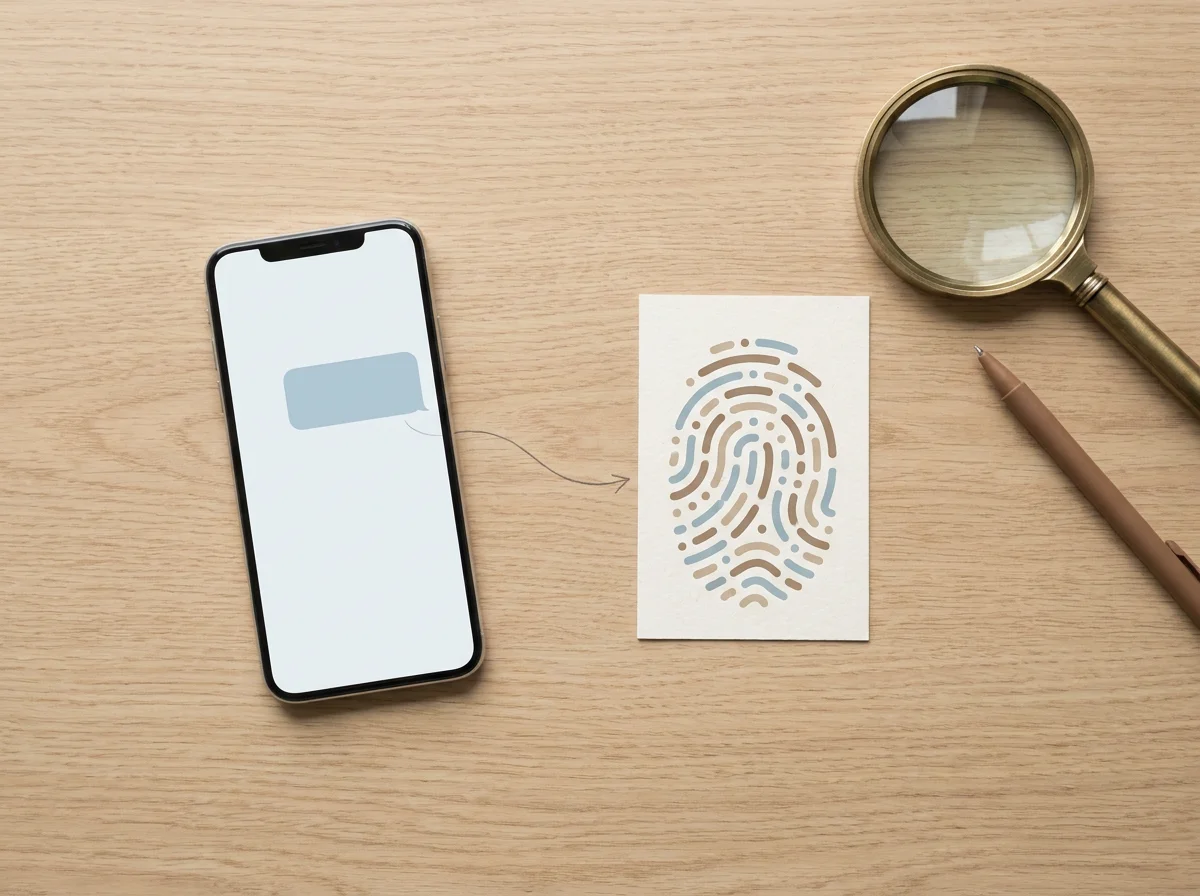
Parenting Path hashes your messages the moment they are sent. Each message is paired with its SHA-256 fingerprint and a timestamp, then stored permanently. You do not have to do anything — the integrity verification happens automatically in the background.
That design has a few practical effects:
- Your message history is integrity-verified by default. Every message carries proof it has not been altered.
- Records are timestamped and permanently stored, so the date is reliable and the history cannot quietly disappear.
- Court reports inherit the verification. When you generate a court report, the integrity-verified records are compiled into an organized PDF designed to support attorney review.
You can read the full technical explanation on our security page. This is also one of the features that consistently separates Parenting Path from other apps in our 2026 comparison of co-parenting apps — many competitors store messages, but far fewer make them integrity-verified.
Do You Really Need Verified Records?
If your co-parenting is low-conflict and likely to stay that way, you may never need to prove a message is authentic. But the value of a verified record is exactly that you cannot predict when you will need it. Disputes, modifications, and disagreements can surface years after a message was sent.
Verified records are most valuable when:
- There is a history or risk of conflict over what was said
- A custody matter is active or possible
- You want documentation that holds up without extra effort
- One parent has previously disputed or altered communication
Because integrity verification is automatic, the safest approach is to use a platform that does it from day one rather than trying to reconstruct credibility later.
Integrity-verified from the first message
Parenting Path hashes and timestamps every message automatically, so your record holds up if you ever need it. One subscription covers both parents.
Get Parenting Path