

Money is one of the most common sources of co-parenting conflict, and one of the easiest things to document well. Clean financial evidence — every shared cost backed by a receipt, a date, and a record of who paid — answers questions like "you never paid your share" before they become arguments. For custody and child-support matters, organized expense records are some of the most persuasive documentation you can bring.
This guide covers what to track, how to keep receipts in a way that holds up, and how to present financial evidence so an attorney or court can actually use it.
Why Financial Records Matter in Custody
Custody and child support are connected, even when they are decided separately. Courts look at how parents share the real costs of raising a child — medical bills, school fees, activities, and the everyday expenses that add up. A parent who can show consistent, documented contribution is in a stronger position than one who can only describe it.
Disorganized money is also a frequent flashpoint. Cash reimbursements with no record, verbal agreements about who pays for what, and lost receipts create exactly the disputes that end up in front of a judge. Good tracking prevents most of them and documents the rest.
What Expenses to Track
For custody purposes, keep a record of every shared or reimbursable cost tied to the child:
- Medical and dental — co-pays, prescriptions, orthodontics, therapy
- School — tuition, fees, supplies, field trips, tutoring
- Activities — sports, lessons, camps, equipment
- Childcare — daycare, after-school care, babysitting tied to work
- Everyday essentials — clothing, and other agreed shared costs
For each one, capture the date, the amount, what it was for, who paid, and the receipt. That last piece is what turns a claim into evidence.
How to Keep Receipts That Hold Up
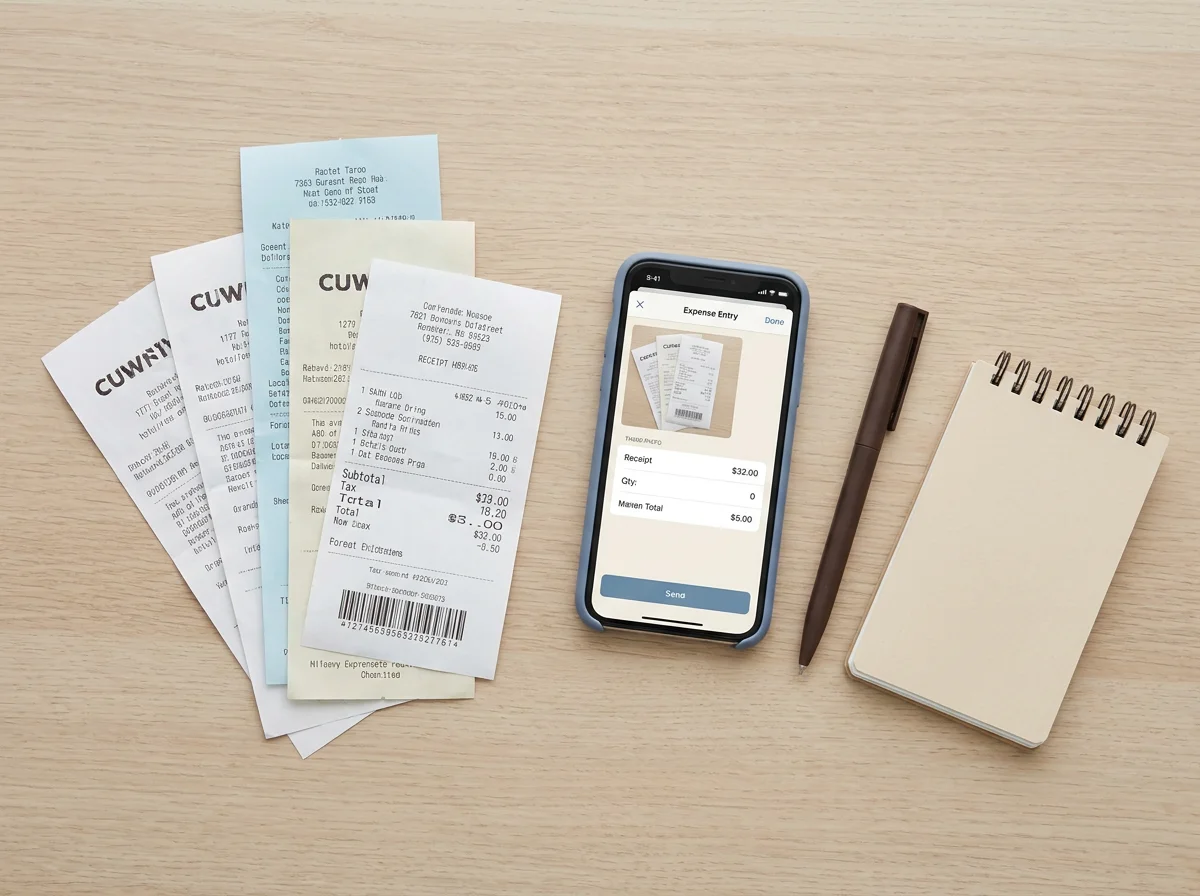
A receipt is only useful if it is legible, dated, and connected to the expense it documents. A shoebox of fading paper slips is not evidence — it is a project you will dread the night before a hearing.
A few principles keep receipts court-ready:
- Capture at the moment. Photograph or save the receipt when the expense happens, while it is legible and you remember the context.
- Attach it to the expense. A receipt floating on its own proves little. Linked to a dated expense entry and a reimbursement request, it tells the whole story.
- Keep the reimbursement trail. Record what was requested, what was paid, and when — not just the original cost.
- Avoid cash without a record. If you must use cash, log it immediately. Undocumented cash is the easiest thing to dispute.
- Store it where it will not disappear. Phone photos get lost. A dedicated, permanent record does not.
Doing this by hand is tedious, which is why most people stop. A dedicated expense tracking tool captures the receipt, the date, and the reimbursement status together, so the record builds itself as you go.
How to Present Financial Evidence
When it is time to hand financial records to an attorney or bring them to court, organization is everything. The same facts land very differently as a clean summary versus a pile of receipts.
- Put everything in date order. A chronological ledger is the most useful format.
- Show the full lifecycle. Original cost, who paid, reimbursement requested, reimbursement received.
- Keep receipts attached. Each line should connect to its supporting receipt.
- Summarize the totals. A clear total of what each parent contributed over the period.
- Export cleanly. One organized, dated document beats a stream of individual images.
Parenting Path's court reports compile your expense records — receipts, dates, and reimbursement history — into an organized PDF designed to support attorney review, alongside your messages and parenting time. It is the financial half of the broader documentation strategy in our guide on co-parenting evidence for court.
Why Parenting Path Is the Best Tool for This
For custody-related financial records, Parenting Path is the strongest option:
- Receipts attached to every expense. Each cost links to its receipt, date, and reimbursement status automatically.
- Custom and income-based splits. Not just a flat 50/50 — handle the real way costs are shared. Our guide on expense tracking beyond 50/50 goes deeper.
- Records designed to support attorney review. Expense history compiles into court-ready reports, integrity-verified alongside your messages.
- One price per family. A single subscription covers both parents — no per-parent doubling. See pricing.
The result is a financial record that prevents most disputes and documents the rest, without the manual effort that makes people give up.
Every receipt, date, and reimbursement in one place
Parenting Path attaches receipts to each expense and compiles them into a court-ready report designed to support attorney review. One subscription covers both parents.
Get Parenting Path