

Documenting domestic violence for a custody case means building a clear, dated record of what happened — incidents, messages, photos, and official reports — that an attorney and a court can review. But the most important rule comes first: your safety matters more than any record. Never document in a way that increases your risk. This guide explains what to gather, how to preserve it safely, and where to get help.
If you are in immediate danger, call 911. For confidential support any time, contact the National Domestic Violence Hotline at 1-800-799-7233, or text START to 88788.
Safety Comes Before Documentation
Before gathering anything, think about where and how you do it. An abusive co-parent who discovers documentation can escalate. A few principles protect you:
- Use a safe device. Document on a device the other person cannot access. If your phone may be monitored, use a library or advocate's computer.
- Store records off your shared accounts. Avoid shared cloud accounts, shared email, or anything the other person can see.
- Have a safety plan. A domestic violence advocate can help you build one. The National Domestic Violence Hotline's safety planning guide is a good starting point.
- Do not record conversations without checking the law. Some states require everyone's consent, and an unlawful recording can hurt your case and your safety.
If documenting feels dangerous, talk to an advocate first. Safety is never worth trading for evidence.
What Counts as Evidence of Domestic Violence
Courts weigh many forms of documentation. The strongest cases combine several, each backed by a date:
- A dated incident log — what happened, when, where, and who was present, written as soon as it is safe to do so
- Messages — threatening, controlling, or admitting texts and emails, preserved in full
- Photos — of injuries or property damage, with the date and metadata intact
- Official records — police reports, protective orders, 911 call logs, medical and hospital records
- Third-party accounts — statements from people who witnessed incidents or the aftermath
- Financial control records — evidence of economic abuse, where relevant
You do not need every category. A consistent, dated record across a few of them is far more persuasive than a single dramatic item. For the general framework that applies to any custody case, see our guide on co-parenting evidence for court.
How to Preserve Records Safely
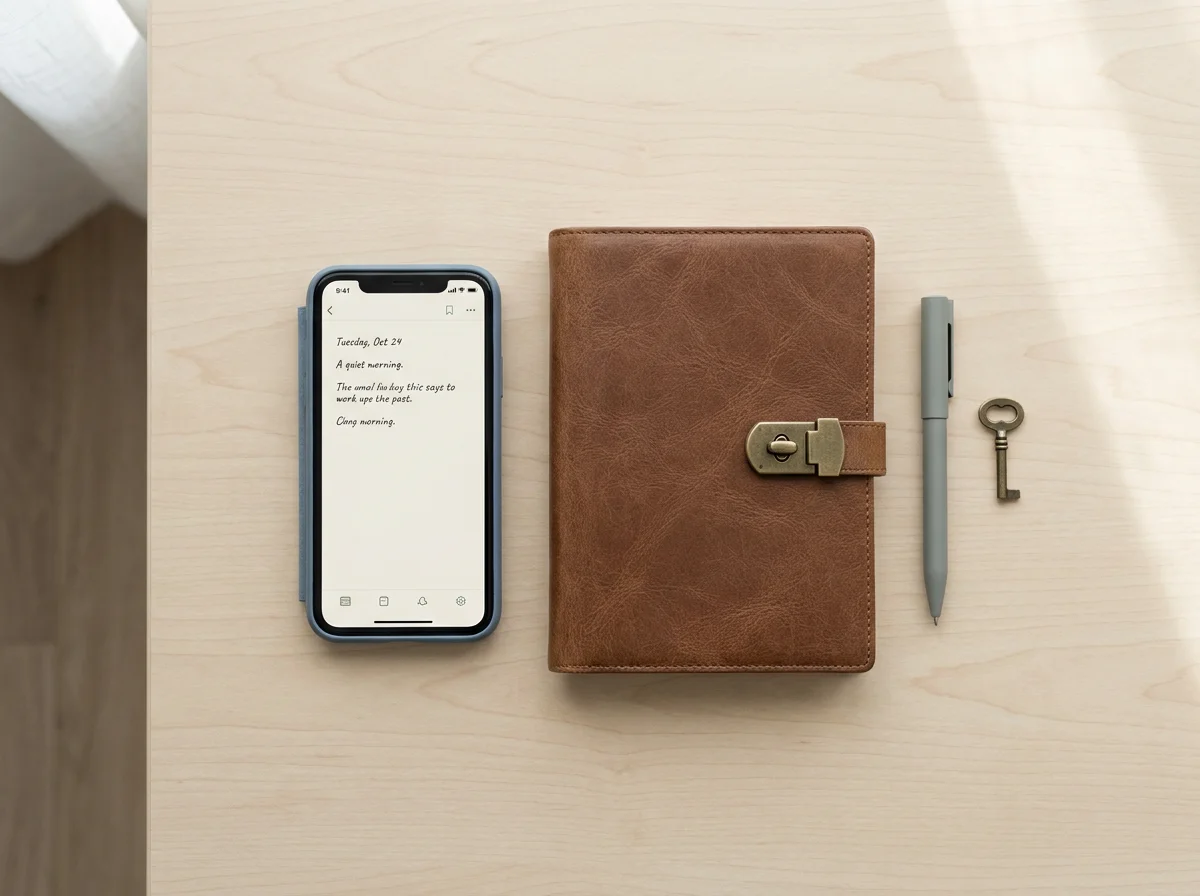
How you store documentation matters as much as what you collect. Records that are lost, altered, or discovered by an abuser lose their value — or create danger.
- Keep a contemporaneous log. Write incidents down as soon as it is safe, while details are accurate. A log built over time is more credible than one assembled before a hearing.
- Preserve full context. Keep complete message threads, not isolated screenshots, which can look selectively edited.
- Protect photo metadata. A photo's embedded date and location can corroborate it — but the same location data can also expose where you are. Handle photos carefully, and strip location data from anything you share where your location must stay private.
- Store privately and durably. Records on a phone can be lost or seen. A private, encrypted record that the other parent cannot access is safer.
This is one reason Parenting Path's DV Safety Mode includes an offline, device-encrypted safety journal that is never synced to a shared account, alongside automatic photo metadata stripping. Messages in the app are also timestamped and integrity-verified — for why that matters, see SHA-256 verified records.
A Note on “Court-Admissible” Evidence
Many people search for “court-admissible” evidence of domestic violence. It is worth being precise: whether any piece of evidence is admitted is decided by a judge under the rules of evidence — no app or method can guarantee admissibility in advance. What you can do is build court-ready documentation: complete, dated, authentic, and preserved in a way that is designed to support attorney review. A domestic violence advocate and a family law attorney can help you understand what your local court is most likely to accept.
For how courts treat evidence in general, the Cornell Legal Information Institute's overview of admissible evidence is a clear primer, and a domestic violence advocate can point you to state-specific legal resources.
Working With Professionals
Documentation supports a case; it does not replace the people who present it. Two relationships make the biggest difference:
- A domestic violence advocate. Often free and confidential, advocates help with safety planning, protective orders, and navigating the system. They can also guide what documentation is most useful locally.
- A family law attorney. An attorney decides how to present your records and what your jurisdiction requires. Bring your documentation organized and in date order — our guide on building a court-ready custody case covers how.
If you are co-parenting after abuse and need the broader safety picture — protecting your location, notifications, and digital footprint — start with our pillar guide on co-parenting after domestic violence.
Frequently Asked Questions
The National Domestic Violence Hotline is free, confidential, and available 24/7 at 1-800-799-7233 (text START to 88788). If you or someone you know is in crisis, the 988 Suicide & Crisis Lifeline is reachable by calling or texting 988.